

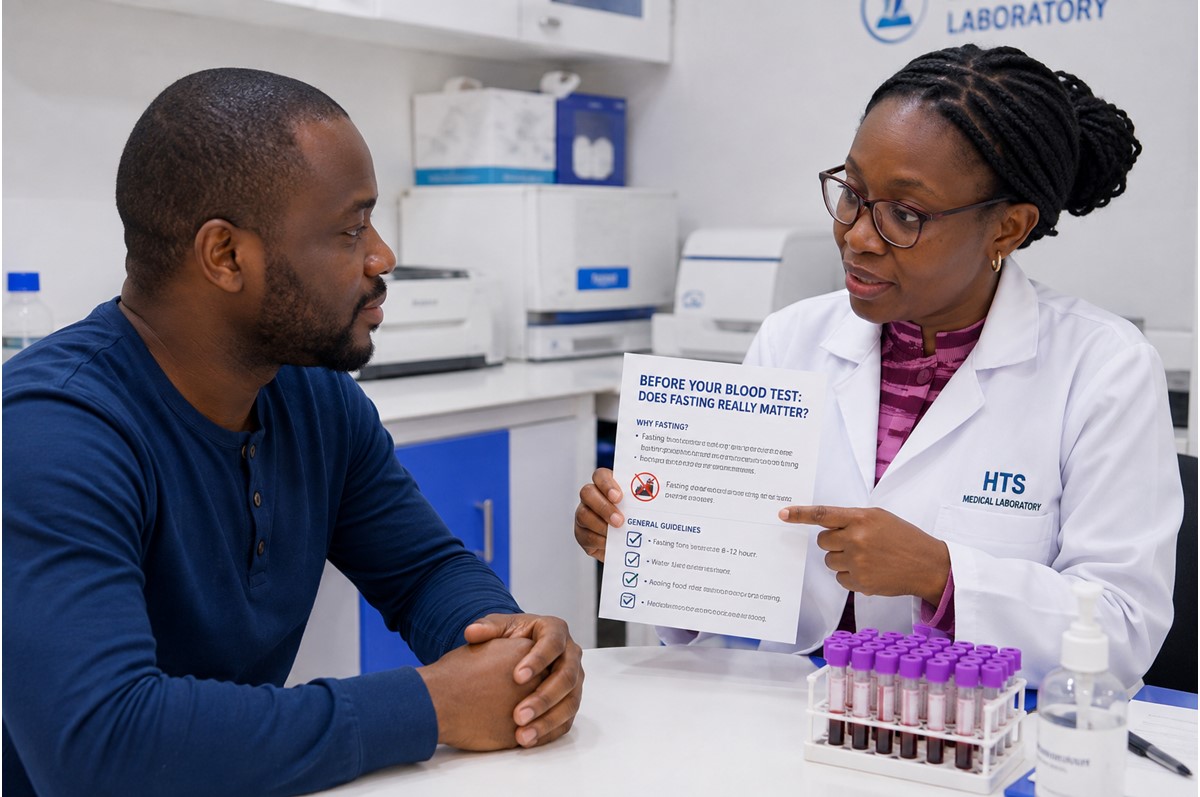
A simple guide to knowing when—and why—you may need to fast before a laboratory test
You have been asked to do a blood test, and one of the first questions that may come to mind is:
“Can I eat before going to the laboratory?”
The answer is: it depends on the test.
Not every blood test requires fasting. However, for certain investigations, eating or drinking before your blood sample is collected can temporarily change the level of substances in your blood and may affect the interpretation of your result.
That is why following the correct preparation instructions is an important part of getting a reliable laboratory result.
What Does Fasting for a Blood Test Mean?
Fasting generally means not eating or consuming certain drinks for a specified period before your blood sample is collected.
The exact fasting period depends on the investigation requested and the instructions given by your healthcare provider or laboratory.
Plain water is often permitted during fasting and can help you remain hydrated, but you should always follow the specific instructions provided for your test.
Why Can Food Affect a Blood Test?
After you eat, nutrients from your meal are absorbed into your bloodstream. This can temporarily alter the concentration of substances such as glucose and lipids (fats).
If a test is intended to measure certain substances under fasting conditions, eating beforehand may therefore influence the result.
This does not necessarily mean something is wrong with your health—it may simply mean the sample was collected under conditions different from those required for that particular investigation.
Which Tests May Require Fasting?
Fasting requirements vary according to the test and clinical circumstances. Tests for which fasting may sometimes be requested include:
- Fasting Blood Sugar (FBS)
- Certain lipid/cholesterol investigations
- Some other specialised blood chemistry investigations
Many commonly requested laboratory tests, however, do not routinely require fasting.
For example, an HbA1c test generally does not require fasting because it reflects average blood glucose over a longer period rather than your glucose level at that particular moment.
The important thing is not to decide for yourself whether fasting is necessary. Confirm the preparation requirements for the specific investigation requested.
If You Have Been Asked to Fast
Follow the instructions provided by your healthcare professional or laboratory carefully.
During the required fasting period:
Do not eat food.
Even a small snack may affect some fasting investigations.
Ask about beverages.
Plain water is often permitted, but other drinks—including sweetened beverages—may interfere with certain tests.
Ask about medications.
Do not stop prescribed medication simply because you are fasting unless your healthcare provider has specifically instructed you to do so.
Tell the laboratory if you accidentally ate or drank something.
Do not hide it. Let the laboratory professional know before your sample is collected so they can determine the appropriate next step.
What About Coffee or Tea?
Do not assume that a drink is acceptable simply because it contains no food.
Coffee, tea, milk, juice, soft drinks and beverages containing sugar or other ingredients may affect certain investigations.
If you have been instructed to fast, confirm exactly what you are permitted to drink.
Should You Fast Longer “Just to Be Safe”?
Not necessarily.
Longer fasting is not automatically better and may be inappropriate for some people. The objective is to follow the preparation requirements for the particular investigation—not to fast for as long as possible.
This is especially important for people with medical conditions, pregnant women, children, older adults and anyone taking medications that may be affected by changes in food intake.
Already Ate Before a Fasting Test?
Tell us.
It is much better for the laboratory to know before collecting your sample than to proceed without knowing that the preparation requirement was not followed.
Depending on the investigation, you may be advised to return at another appropriate time.
Remember: proper patient preparation is part of producing a reliable laboratory result.
The HTS Takeaway
Not every blood test requires fasting.
If fasting is required, what you eat or drink—and when—can influence some laboratory measurements. The safest approach is simple:
Ask. Prepare. Test.
Before coming for your blood test, confirm whether fasting or any other special preparation is required and follow the instructions provided.
At HTS Medical Laboratory, our team is available to guide you on the appropriate preparation requirements for the laboratory investigations we provide.
Need to ask about your test before visiting?
Call: +234 810 772 9353 | +234 813 559 2806
Email: htsmlab@gmail.com
HTS Medical Laboratory
Honesty • Tranquility • Safety
Health Information Notice: This article provides general educational information and is not a substitute for medical advice, diagnosis or treatment. Follow the instructions of your healthcare professional and the laboratory regarding preparation for your specific investigation.